

News
News
- TREAT Neurolab
- News
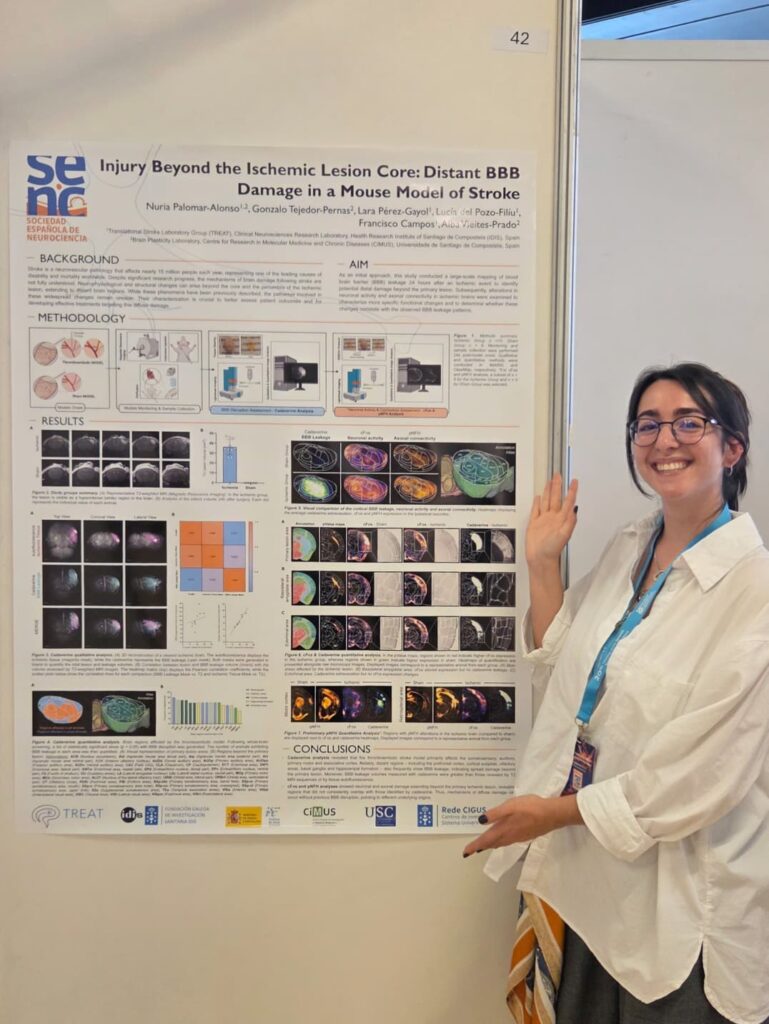
Our PhD student Nuria Palomar took part in the 20th Meeting of the Spanish Society for Neuroscience (SENC), held in Las Palmas de Gran Canaria from September 3 to 5.
There, she presented her work “Injury Beyond the Ischemic Lesion Core: Distant BBB Damage in a Mouse Model of Stroke”, a study that explores how stroke causes damage to the blood-brain barrier beyond the main lesion, providing new insights into understanding and treating this disease.
- TREAT Neurolab
- News
A global database reveals how proteins in the blood reflect the state of the brain, opening new pathways for early diagnosis and the development of personalized therapies.
The prestigious journals Nature Medicine and Nature Aging are publishing this Wednesday (07/16/2025) the results of a long-term study that could represent a major leap forward in the early detection and therapeutic development for leading neurodegenerative diseases, such as Alzheimer’s, Parkinson’s, frontotemporal dementia, and amyotrophic lateral sclerosis (ALS).
“Until a couple of years ago, we didn’t believe blood could capture what was happening in the brain,” emphasized Carlos Cruchaga, researcher at the Neurogenomics Lab at Washington University in St. Louis (Missouri, United States), and one of the lead authors of the discovery, in an interview with the Efe agency.
The work comprises five scientific papers published in these journals under the umbrella of an international society of scientists known as the Global Consortium for Neurodegeneration Proteomics. As of Wednesday, it is opening to the entire scientific community the largest-ever database of protein biomarkers related to these diseases — completely free of charge.
https://www.dw.com/es/la-ciencia-desentra%C3%B1a-el-mapa-proteico-de-la-neurodegeneraci%C3%B3n/a-73302140: Science unravels the map of neurodegeneration
- TREAT Neurolab
- News
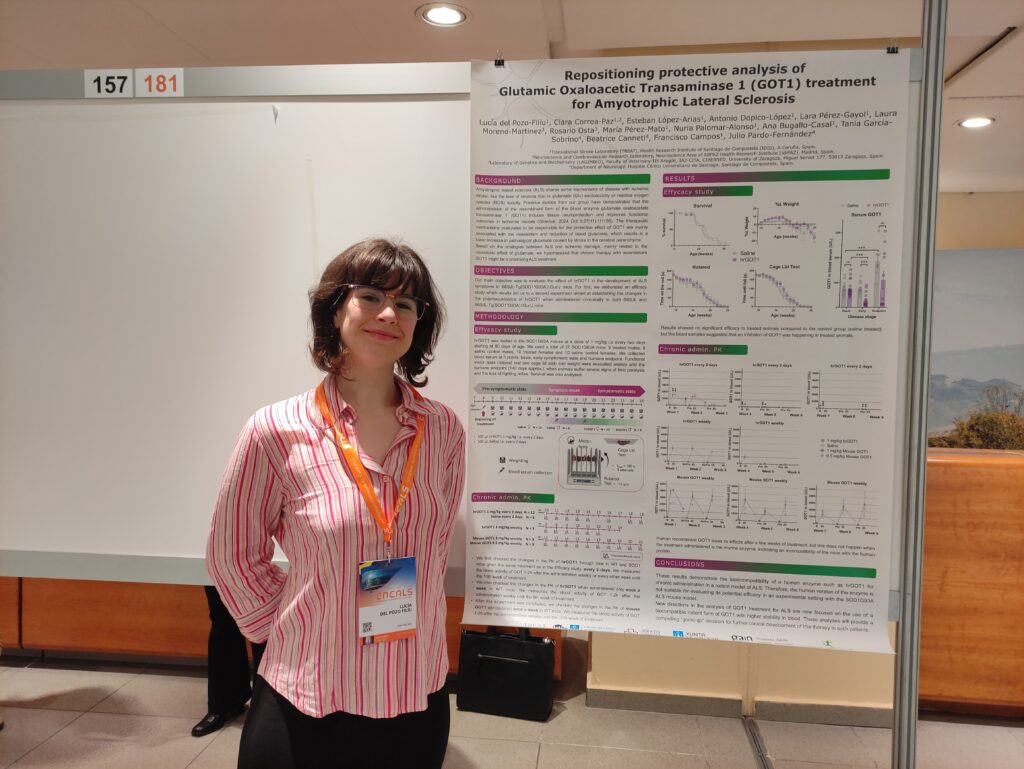
Our predoctoral researcher Lucía del Pozo participated in the ENCALS 2025 congress (European Network to Cure ALS), held in Turin, Italy, where she presented her work in poster format.
The study, titled: “Repositioning protective analysis of Glutamic Oxaloacetic Transaminase 1 (GOT1) treatment for Amyotrophic Lateral Sclerosis,”
explores the therapeutic potential of the GOT1 enzyme in Amyotrophic Lateral Sclerosis (ALS).
- TREAT Neurolab
- News
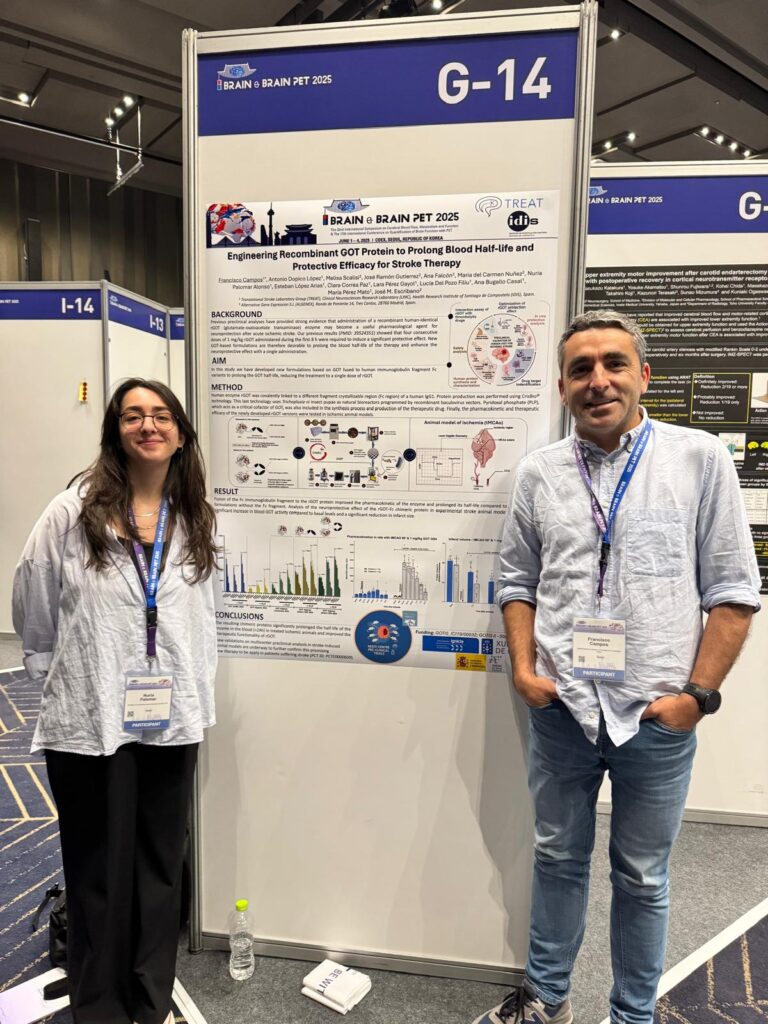
Our researchers Fran Campos (group leader) and Nuria Palomar (predoctoral researcher) participated in the prestigious international congress Brain & Brain PET 2025, held in South Korea.
During the event, they presented the poster titled: “Engineering Recombinant GOT Protein to Prolong Blood Half-life and Protective Efficacy for Stroke Therapy”, where they shared the progress of their work on developing recombinant proteins as a potential therapy for stroke.
This study focuses on improving the efficacy and half-life of the GOT protein in the bloodstream, with the aim of enhancing its neuroprotective action in cerebral ischemia events.
One more step toward new therapeutic strategies for stroke treatment, with an innovative and promising approach.

- TREAT Neurolab
- News
In accordance with the rules of the call, the Selection Committee—composed of members of the Innovation and Transfer Commission of the Health Research Institute of Santiago de Compostela—carried out an individual evaluation of the applications received, corresponding to publications accepted between October and December 2024.
The Selection Committee awarded the prize, the Innova-IDIS Scientific Animation Capsule, to the application submitted by María Pérez Mato, a member of the TREAT group.
Title: Preclinical validation of human recombinant glutamate-oxaloacetate transaminase for the treatment of acute ischemic stroke
Authors: María Pérez-Mato, Antonio Dopico-López, Yunus Akkoc, Sonia López-Amoedo, Clara Correa-Paz, María Candamo-Lourido, Ramón Iglesias-Rey, Esteban López-Arias, Ana Bugallo-Casal, Andrés da Silva-Candal, Susana B. Bravo, María Del Pilar Chantada-Vázquez, Susana Arias, María Santamaría-Cadavid, Ana Estany-Gestal, Ahlem Zaghmi, Marc A. Gauthier, María Gutiérrez-Fernández, Abraham Martin, Jordi Llop, Cristina Rodríguez, Ángeles Almeida, Martina Migliavacca, Ester Polo, Beatriz Pelaz, Devrim Gozuacik, Naouale El Yamani, Tanima SenGupta, Elise Rundén-Pran, José Vivancos, Mar Castellanos, Exuperio Díez-Tejedor, Tomás Sobrino, Aharon Rabinkov, David Mirelman, José Castillo, Francisco Campos.
Journal: iScience
- TREAT Neurolab
- News
On May 15th, the BioIntegraSaúde 2025 event took place, co-organized by the three institutes: IDIS, IISGS, and INIBIC. Two colleagues from the TREAT group presented their work in poster format.
Nuria Palomar spoke about the disruption of the blood-brain barrier in areas distant from the cerebral infarct, while Lucía del Pozo presented an analysis of treatment with GOT1 for amyotrophic lateral sclerosis (ALS).
Congratulations to both for their excellent work and for representing the group at such a high level!
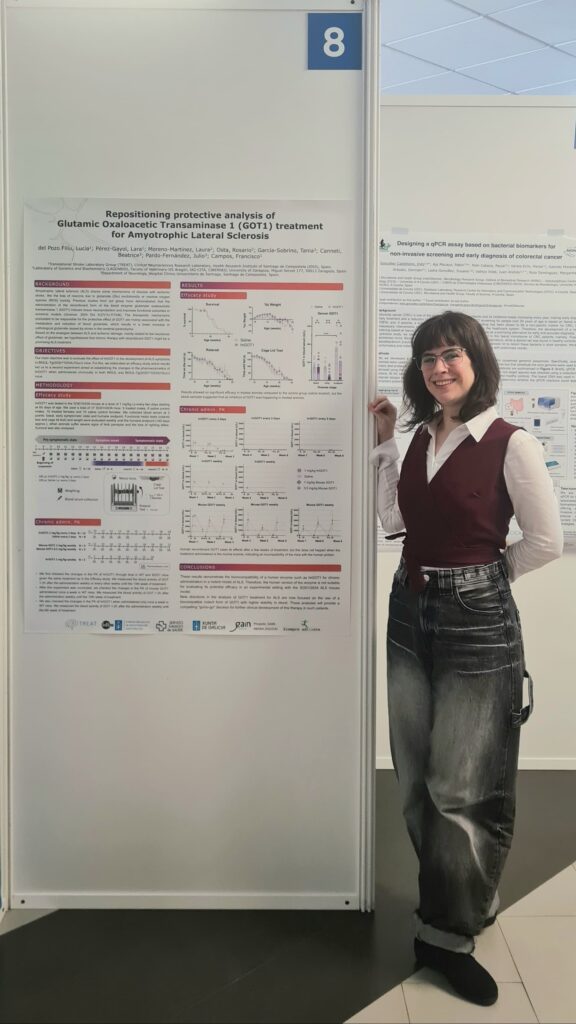
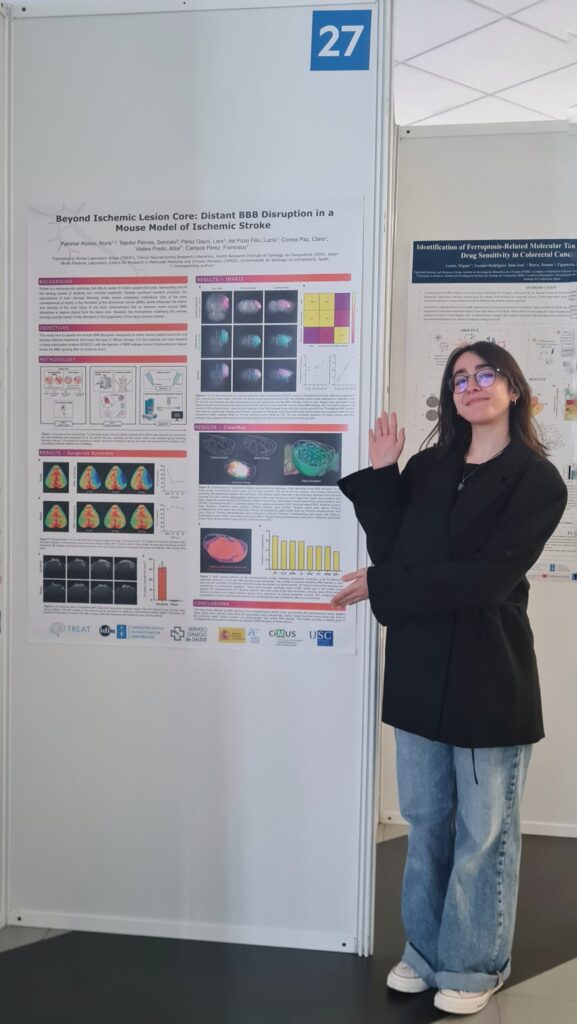
- TREAT Neurolab
- News
Roche’s clot-dissolving agent TNKase (tenecteplase) racked up its second FDA approval on Monday, earning a nod to treat acute ischaemic stroke (AIS) in adults.
The drug was designed to be delivered more quickly than the current standard-of-care stroke treatment, Roche’s Activase (alteplase). TNKase is given as a single five-second intravenous (IV) bolus, while Activase requires a 60-minute infusion.
“TNKase provides a faster and simpler administration, which can be critical for anyone who is dealing with an acute stroke,” commented Levi Garraway, the chief medical officer and head of global product development at Roche’s Genentech unit.
Monday’s green light was based on the results of the investigator-initiated AcT trial, which compared TNKase with Activase in AIS patients admitted to 22 stroke centres who presented with a disabling neurological deficit. The study, conducted by the University of Calgary and funded by the Canadian Institute of Health Research, found that TNKase’s efficacy and safety is comparable to that of Activase.
TNKase was first approved to treat acute ST-elevation myocardial infarction (STEMI) in adults more than two decades ago.
Together, Activase and TNKase brought in a combined CHF1.2 billion ($1.3 billion) in sales for Roche last year, which the pharma said represents a 5% boost over 2023 revenues mainly due to increasing demand in AIS.
- TREAT Neurolab
- News
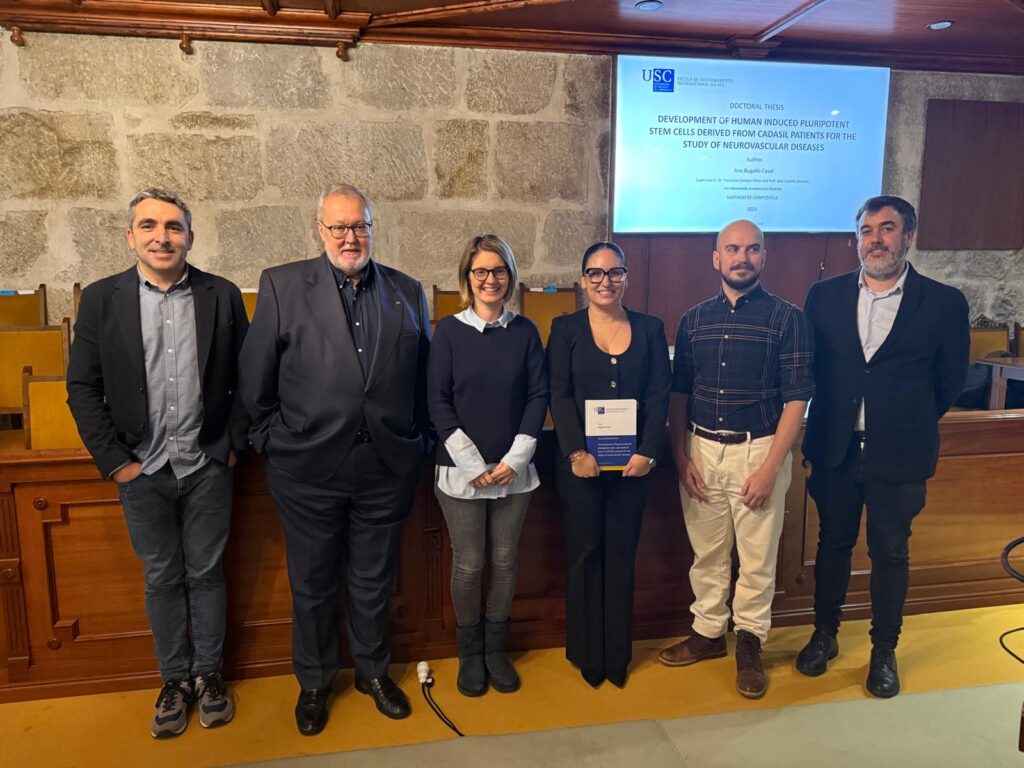
After so much effort, dedication, and setbacks, today Ana defended her thesis:
“Development of human induced pluripotent stem cells derived from CADASIL patients for the study of neurovascular diseases”
This project marks an advancement in the study of neurovascular diseases like CADASIL, using human induced pluripotent stem cells (hiPSCs) to explore new avenues for research and treatment.
From the TREAT team, we want to congratulate Ana. This achievement is not only the result of many years and endless hours, but also of her perseverance and commitment.
This is just the beginning of the many scientific successes to come.
Congratulations, Ana!
Natural History Studies addressing unmet needs in Rare Diseases (CADANHIS)
Funding European Joint Programme Rare Diseases and Instituto de Salud Carlos III Collaborators Hugues Chabriat (France), Sophie Tezenas Du Montcel (France), Israel Fernández Cadenas (Spain), Francisco Campos (Spain), Isabella Canavero (Italy), Helena Karlström (Sweden) y Steffen Tiedt (Germany) Period 2024-2026
Natural History Studies addressing unmet needs in Rare Diseases (CADANHIS)(AC23_2/00029)
Funding European Joint Programme Rare Diseases and Instituto de Salud Carlos III Collaborators Hugues Chabriat (France), Sophie Tezenas Du Montcel (France), Israel Fernández Cadenas (Spain), Francisco Campos (Spain), Isabella Canavero (Italy), Helena Karlström (Sweden) y Steffen Tiedt (Germany) Period 2024-2026

